At a Glance
Who: Jason Anthony, superintendent of Pilot Mountain State Park
What: Caring for and preserving one of our region’s most recognizable natural landmarks
Where: Pilot Mountain State Park, near Pinnacle, North Carolina
Since: Jason has worked in the North Carolina state parks system for 23 years, plus two seasonal years. He has been superintendent at Pilot Mountain for approximately four years.
What makes it special: The people who care for the park, the history behind its preservation, and the natural beauty and experiences it offers to generations of visitors.
Visit / Connect
Park: Pilot Mountain State Park
Location: Surry and Yadkin Counties, North Carolina
Mountain Section & Visitor Center:
1721 Pilot Knob Park Road
Pinnacle, NC 27043
Website: Pilot Mountain State Park
Pilot Mountain State Park has several access points throughout its mountain and Yadkin River sections. Visit the official park website for directions to other access areas, Visitor Center information, hours, trail conditions, facilities, and current visitor alerts.
The Story
For many of us, Pilot Mountain is a familiar sight. We see it from the road, point it out to visitors, and watch it change with the seasons. It’s part of the landscape we call home.
But have you ever stopped to think about the people who dedicate their working lives to caring for this place—and what it means to them?
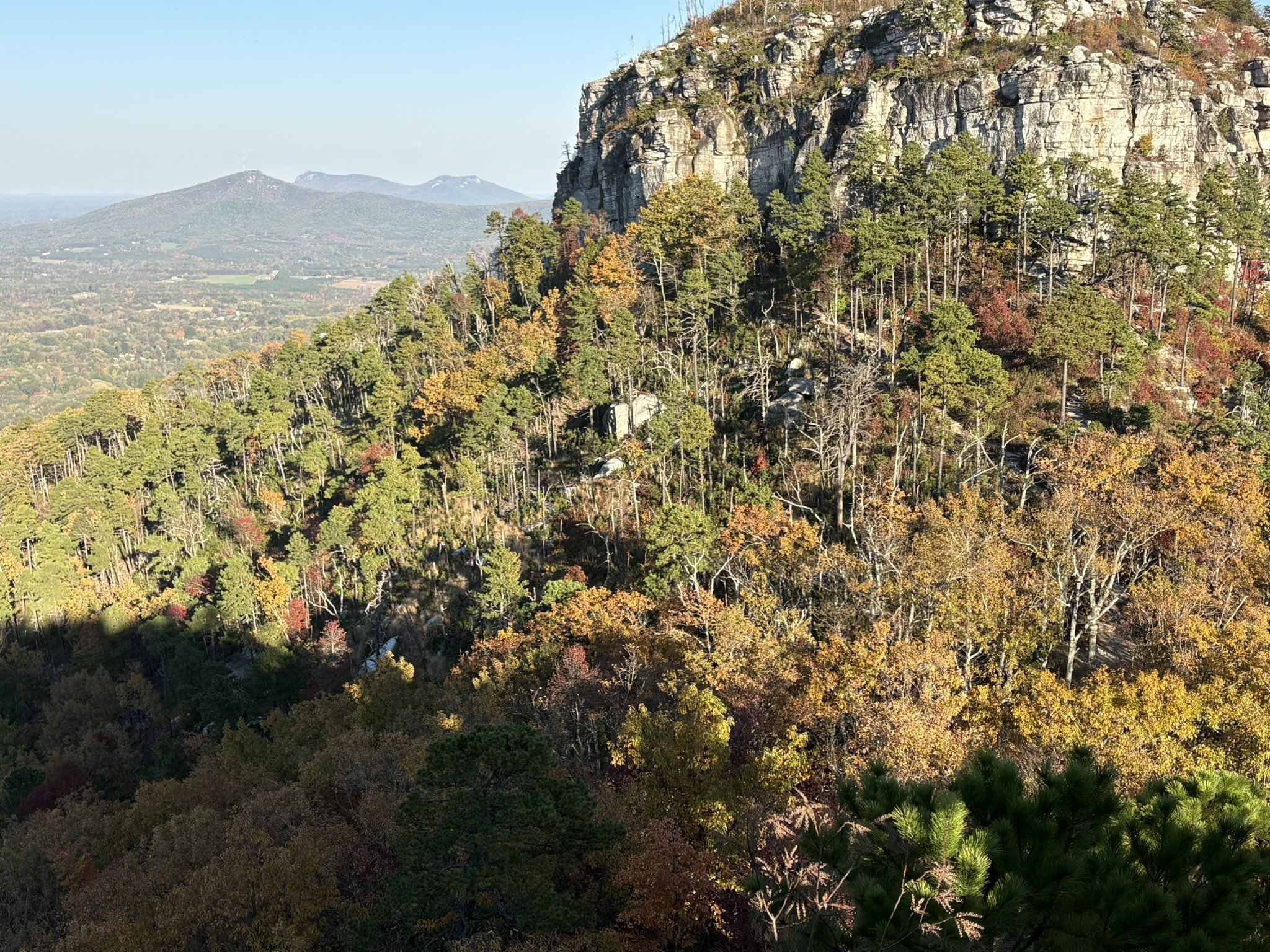
The rocky cliffs and surrounding landscape are part of what make Pilot Mountain State Park such a recognizable landmark in our region.
For Jason Anthony, superintendent of Pilot Mountain State Park, caring for the land is about much more than maintaining trails, keeping facilities in order, or making sure visitors follow the rules. After more than two decades in the North Carolina state parks system, it's clear that caring for the land and helping people experience it mean a great deal to Jason.
Listening to him talk about the park, I came away with the feeling that this work is more than a career. It seems to be something he believes in—a way to serve others while caring for a place that deserves to be preserved.
A Mountain That Made an Impression
Jason Anthony grew up on the coast of North Carolina, a self-described ‘flatlander.’ When he interviewed for his first ranger position at Hanging Rock State Park, he got to know this part of the state a little better. He remembers driving over to Hanging Rock when, all of a sudden, Moore's Knob appeared before him. It seemed to pop up. He found it impressive—and if you've ever driven these roads and watched one of our mountains suddenly appear before you, you probably understand what he means.
Pilot Mountain is part of the Sauratown Mountain range, and it has been a familiar sight in this area for generations. Long before we had GPS or roads with signs to tell us where we were, the mountain helped people find their way. Native American travelers and early settlers could use its distinctive shape as a landmark as they moved through this part of North Carolina.
It's interesting to think about how many people over the years have looked toward that same mountain to help them find their way.
It’s hard to overstate how much this mountain has become part of the identity of the surrounding area. The Town of Pilot Mountain takes its name from the landmark just a few miles away, and its familiar outline remains a defining feature of the community we call home.
Now, Jason is the superintendent of the very park that surrounds that familiar landmark, helping care for the land and preserve it for those who will come after us.
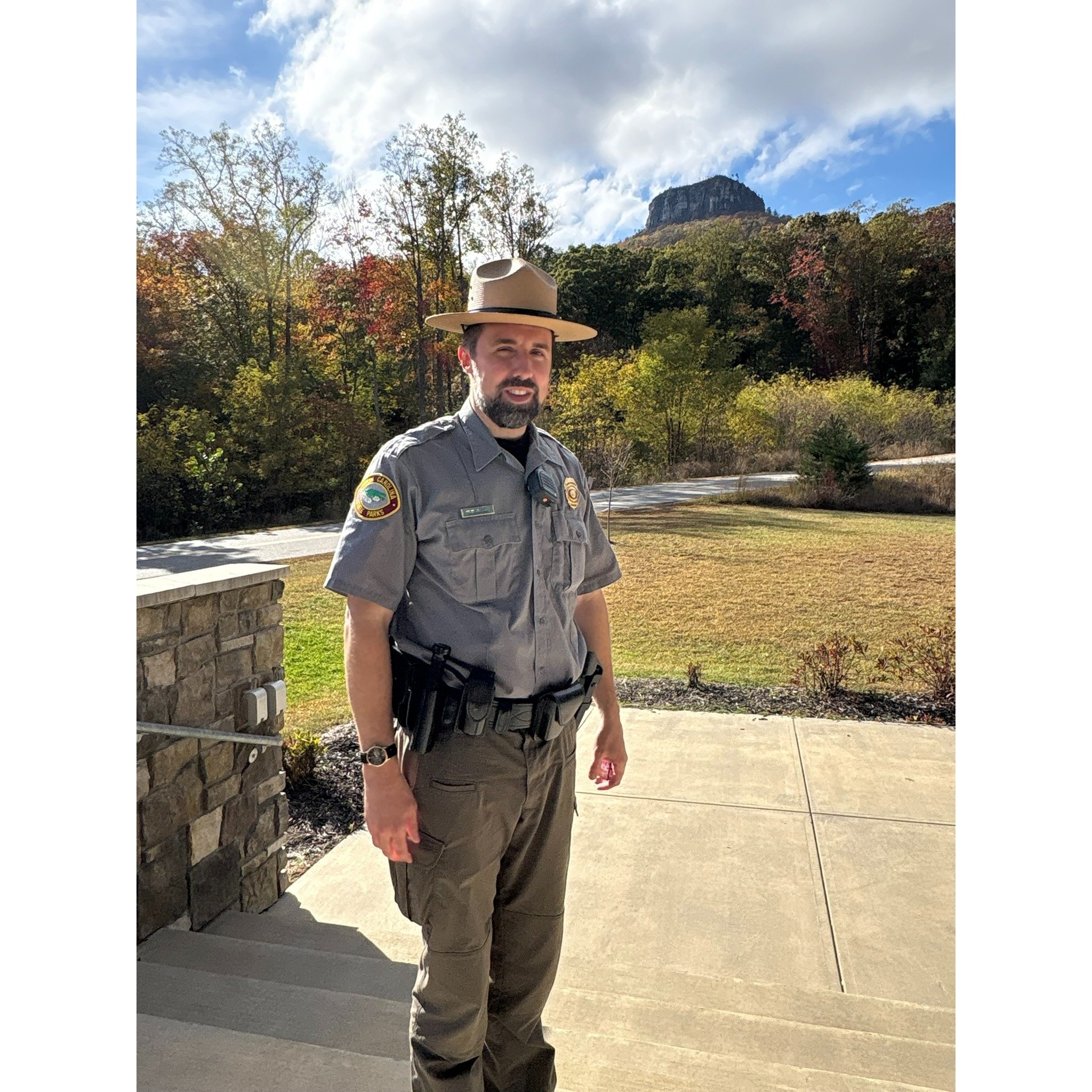
Jason Anthony, superintendent of Pilot Mountain State Park, has spent more than two decades working in the North Carolina state parks system.
Before coming to Pilot Mountain, Jason spent approximately 18 years as a ranger at Hanging Rock State Park, following two seasonal years at Fort Macon State Park on the North Carolina coast. With a background in English and history, he also appreciates the stories behind the places he has worked.
But for Jason, the park’s story is not only about its past. It is also about the people who visit today, the experiences they carry home with them, and the responsibility of making sure the park will be here for future generations.
The Work Visitors Don't Always See
When people visit Pilot Mountain State Park, they usually come for the views, the trails, the river, or simply a chance to spend time outdoors. They may not give much thought to everything that has to happen behind the scenes to keep the park ready for them.
Park employees clear fallen trees and debris, maintain facilities, clean restrooms, open and close gates, lead educational programs, and help visitors who need assistance. Their work also includes law enforcement, crowd management, and prescribed burns. And the job doesn't always follow a typical workweek. Evenings, weekends, and holidays are part of caring for a park that welcomes visitors throughout the year.
It is a wide range of responsibilities, much of it happening quietly, out of sight.
For many visitors, the visitor center is one of their first stops. It's a place to get information, ask questions, and learn a little more about the park before heading out to explore. Helping visitors make the most of their time here is another part of caring for the park.
Yet when Jason talks about the work, he doesn't focus on the long list of duties. He talks about the opportunity to serve people and help them experience something meaningful.
Sometimes that means introducing schoolchildren to the outdoors. Jason has watched children enter the woods for the first time, some a little nervous and others immediately fascinated by everything around them. Those first encounters with nature can stay with a person. They may even become the beginning of a lifelong appreciation for the world beyond their own backyard.
For someone whose work is centered on protecting these places, helping a child discover the outdoors is a reminder of why that care matters.
A Small Reminder That Stayed With Him
One of the stories Jason shared with me was about a visitor he helped around Easter. The man had gotten lost and needed help finding his car. After Jason helped him, the visitor gave him a small button with the words “He Is Risen.”
Jason still carries that button in his vehicle.
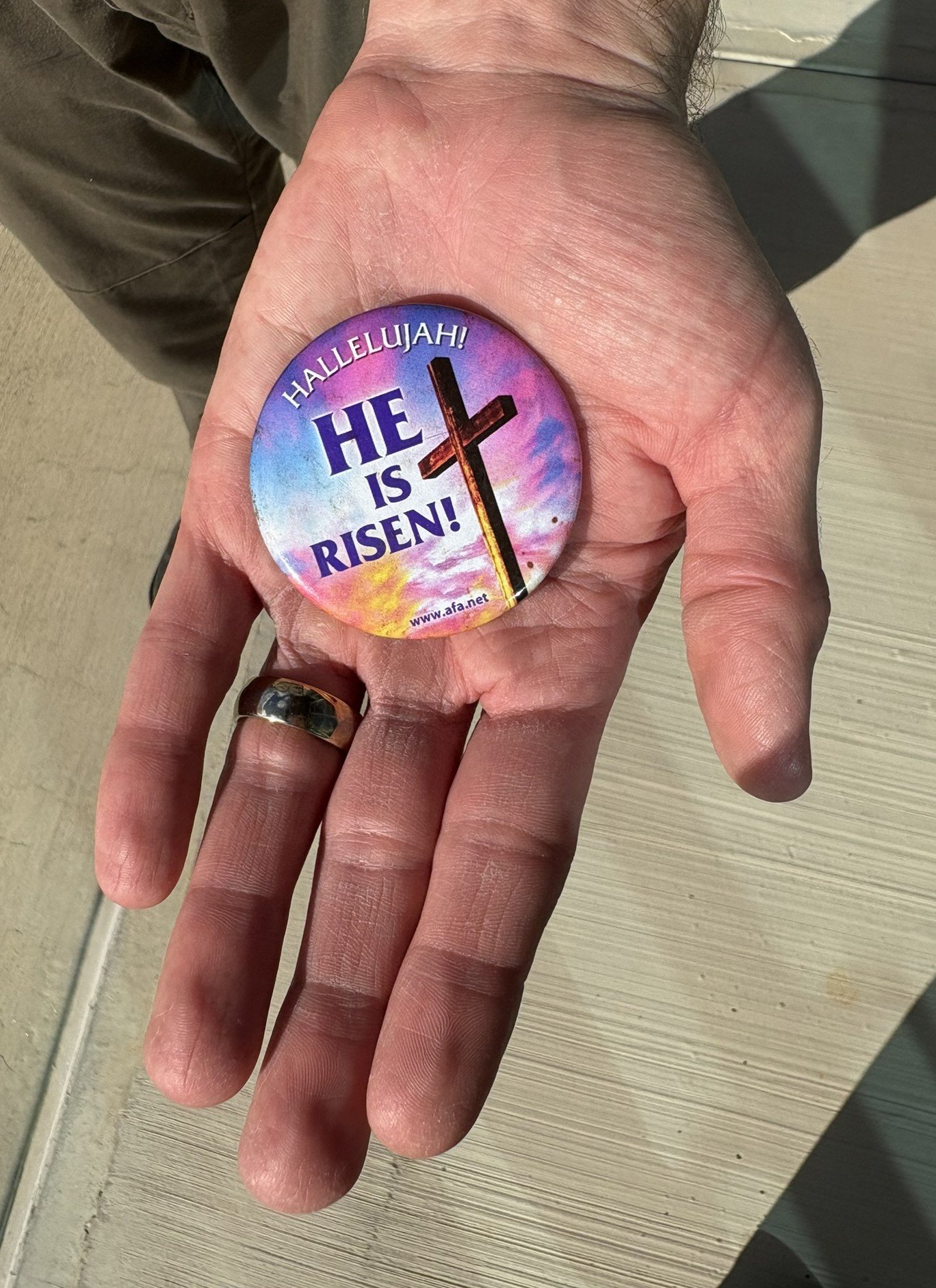
A small button given to Jason by a visitor he helped one Easter remains a meaningful reminder of an ordinary day that became something special.
It’s a simple object, but I think there’s something meaningful about the fact that he has kept it all these years. What might have seemed like an ordinary day at work became a personal moment that stayed with him.
In a job that involves helping strangers and caring for a place that belongs to everyone, those connections can mean a lot. Sometimes, a small act of kindness leaves you with a reminder you carry long after the moment has passed—quite literally, in Jason’s case.
A Place Worth Protecting
As Jason and I talked about the park, he shared some of the history behind how places like Pilot Mountain came to be protected. He made an important point: these places don't simply exist because the land is beautiful. Natural resources may not have been created by people, but preserving them for future generations takes commitment, hard work, and the efforts of many people.
Pilot Mountain's own story is a good example.
Jason talked about the people who helped make the mountain what it is today. In the 1920s, highway engineer W. L. Spoon helped make it more accessible to visitors by developing a road up its slopes. Decades later, Joe C. Matthews was among those who advocated for protecting Pilot Mountain as a state park, helping build public awareness and support. Those efforts, along with the work of other local citizens, helped lead to Pilot Mountain becoming North Carolina's fourteenth state park in 1968.
Jason also brought up nearby Hanging Rock State Park, where the Civilian Conservation Corps helped develop park facilities during the Great Depression. Their work left a lasting mark on the park and is another reminder of how much dedication and effort can go into preserving a place for others to enjoy.
As Jason explained, the parks we enjoy today are here because people cared enough to do something. They gave their time, energy, and resources because they believed these places were worth protecting.
That responsibility hasn't ended. The people who helped establish and preserve these parks made it possible for us to enjoy them today. Now, the work continues with those who care for the parks and the visitors who share in the responsibility of protecting them.
Jason hopes the parks will continue to be protected so future generations can experience them, too. He also hopes the mission of the state parks system never changes.
That hope is about more than keeping a familiar landmark on the horizon. It's about protecting the natural resources, experiences, and sense of wonder that make these places special in the first place.
The Places We Might Overlook
When people think of Pilot Mountain State Park, the Big Pinnacle usually comes to mind first. It is the unmistakable feature that draws the eye and gives the park its familiar identity.
But Jason also appreciates the parts of the park that receive less attention.
One is Bean Shoals, along the Yadkin River. Away from the mountain's familiar silhouette, the river offers another way to experience the park, with its own scenery and history. The remains of the old canal are a reminder that this part of the area has stories of its own.
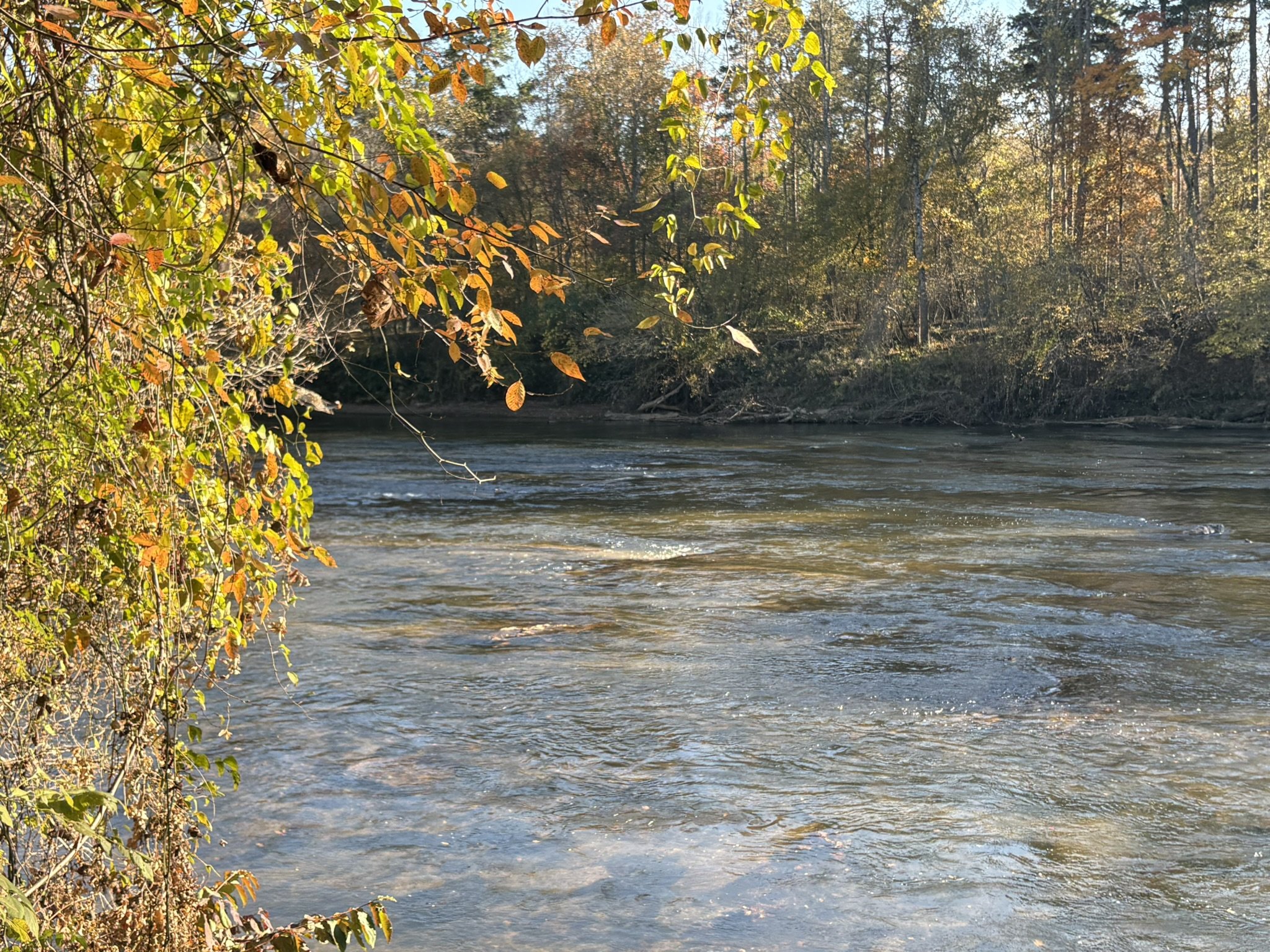
The Bean Shoals area along the Yadkin River offers a quieter, different way to experience Pilot Mountain State Park.
Jason also enjoys the Pilot Knob Trail around the base of Big Pinnacle, particularly for its geology. The short, moderately challenging trail passes impressive rock formations and a tall cliff. Even in a place that feels familiar, there are details to discover if we slow down enough to notice them.
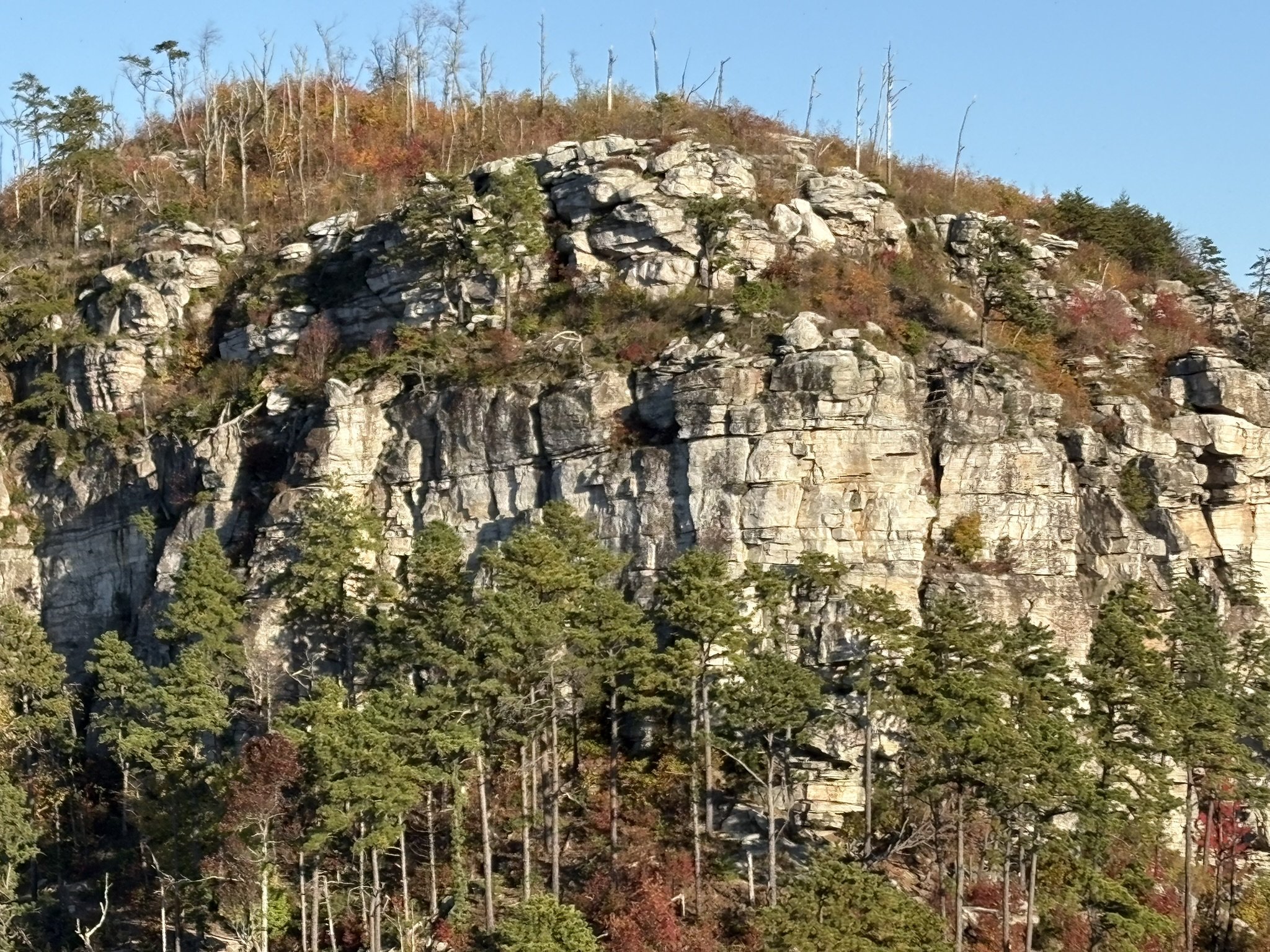
The rock formations along Pilot Knob Trail offer another reason to slow down and explore beyond the familiar views of the mountain.
The more time you spend in a place, the more you begin to see—not just the view everyone photographs, but the smaller features and quieter corners that make it whole.
Of course, living and working in a state park can bring a few surprises of its own.
Jason and his family live at the park, and one day his wife told him there was a bear on their roof. When he looked outside, he saw a yearling black bear climbing down the lattice.
It's a memorable reminder that the park is not simply a place people visit. It is also home to wildlife—and, for Jason and his family, part of everyday life.
A Reminder to Look Up
Jason understands that people sometimes take a place like Pilot Mountain for granted. It can become so familiar that we forget what a remarkable thing it is to have this landscape right here in our own backyard.
The mountain's beauty may be what first draws us in, but preserving it requires us to look beyond the view and recognize what it takes to keep these places protected.
Jason shared a thought with me that has stayed with me. When we're walking along a trail, we tend to keep our eyes on the ground. We're watching for roots, holes, uneven footing, or perhaps a rattlesnake. We have good reason to pay attention to where we're stepping.
But Jason reminds us not to forget to look up.
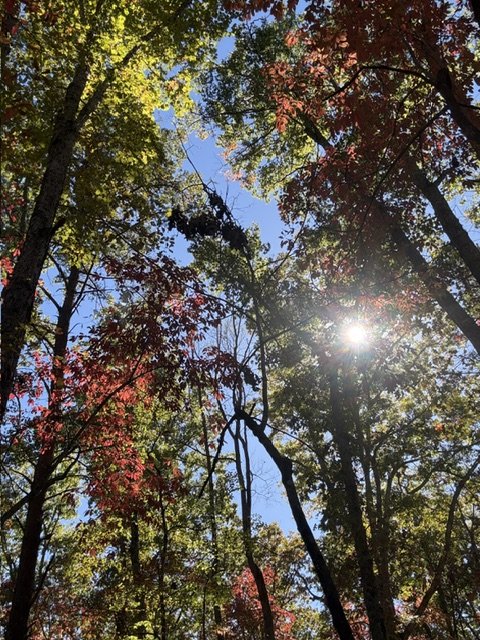
A glimpse of the beauty waiting overhead for those who take a moment to look up.
Look at the mountain. Look at the trees reaching toward the sky. Take a moment to notice the beauty above us, rather than concentrating only on the path beneath our feet.
In his follow-up email, Jason shared a verse that helps explain what this means to him. Psalm 19:1, from the King James Version, reads:
“The heavens declare the glory of God; and the firmament sheweth his handywork.”
Put simply, the beauty of creation points to the Creator. From the mountain rising above the surrounding countryside to the trees, rivers, and changing skies, there are reminders of that handiwork all around us if we take the time to notice.
For Jason, caring for the park means helping preserve this natural beauty so others can experience it, too. His words remind us that these places are more than scenery. They are worth appreciating, protecting, and passing along to the generations who will come after us.
The next time you pass Pilot Mountain or visit the park, take a moment to look beyond the familiar outline of the Big Pinnacle. Think about the people who worked to preserve this place and those who continue to care for it today.
Then, when you find yourself on a trail, remember Jason's advice.
Watch where you step, of course. But don't forget to look up.
There is a whole lot of beauty waiting for us when we do.